
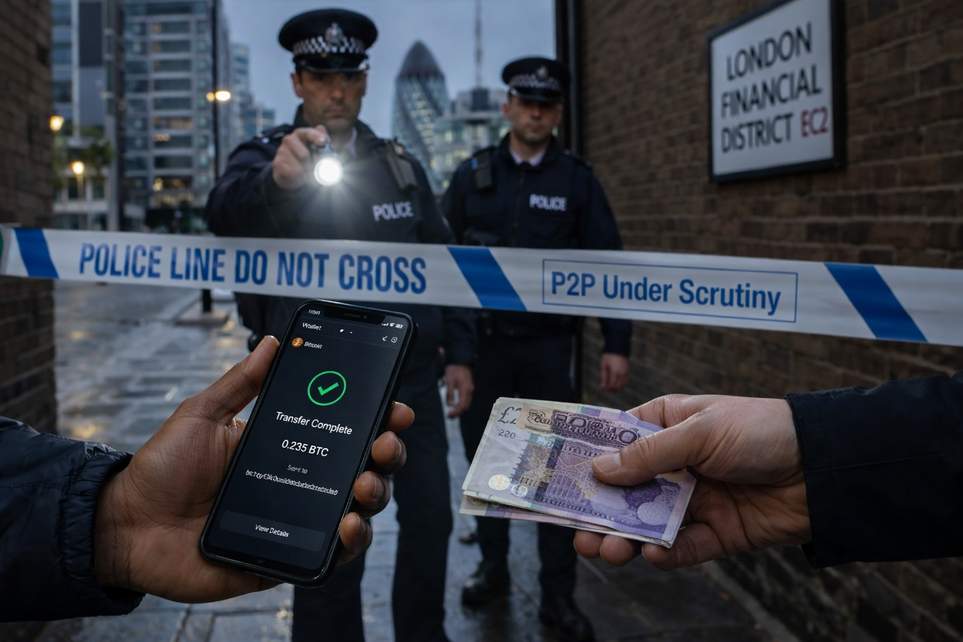
UK Raids on P2P Crypto Traders: When Financial Freedom Meets Paperwork
What happened and why officials care
Short version: UK authorities knocked on several London doors after spotting people who had turned person-to-person crypto swapping into a repeat business. The message was blunt — if you’re running crypto trades like a business, don’t be surprised when regulators want names, receipts, and a proper audit trail.
The law draws a simple line: swapping crypto with a mate once in a while is one thing, running an exchange-like operation over and over is another. Once activity looks like a recurring service — taking fees, arranging trades, hosting a machine or desk that matches buyers and sellers — it can fall under anti-money-laundering rules and must register with the regulator before operating.
Those registration rules aren’t bureaucratic busywork. Registered firms must verify customers, log transactions, monitor for suspicious behavior and report it. That framework is what authorities rely on to stop stolen funds, sanctions evasion and other criminal flows from slipping into everyday payments.
Promotions matter too. If you’re advertising crypto services to people in the UK, there are strict permitted routes for doing it. Jump outside those lanes and you’re not just facing regulatory paperwork — you’re risking criminal penalties.
What’s gained, what’s lost, and why it feels messy
Enforcement like this cleans up real risks. It pushes shady, repeat-dealing businesses out of the shadows and into places where customers have clearer protections and crimes are easier to trace. That smell of accountability is reassuring — until you notice the side effects.
First casualty: privacy. Moving onto regulated platforms creates records that link identities to wallets and bank accounts. That’s fantastic when you need refunds or fraud investigations, but it also turns what used to be a private interaction into another file on someone’s financial ledger.
Second casualty: access. People who don’t have neat bank histories, who live in cash-heavy economies, who travel between jurisdictions or who simply distrust big institutions often rely on informal routes into crypto. Squeezing those routes doesn’t magically make them safe; it can just make them disappear, leaving a gap for people who were using p2p for practical reasons rather than criminal ones.
Third casualty: autonomy. The original crypto vibe was “hold your own keys, move your own money.” Every enforcement nudge that funnels people back to licensed intermediaries chips away at that promise — making the space safer like a modern bank, but also less decentralized in spirit.
So yes: the regulators are right to target unlicensed dealers that act like exchanges. But every time the market is folded into a regulated box, we should ask what kind of ecosystem we want. Do we prefer a tightly supervised, safer-but-more-monitored system — or do we want to preserve some messy, private, peer-to-peer options that carry risk but also freedom?
There’s no tidy answer. The enforcement clears some dangers but reshapes the market, nudging people toward regulated platforms, banks and custodians. Whether that trade-off is worth it depends on whether you value protection over privacy, oversight over autonomy — and whether policymakers can create safe, low-friction ways for everyday people to access crypto without turning everything into a compliance headache.
