
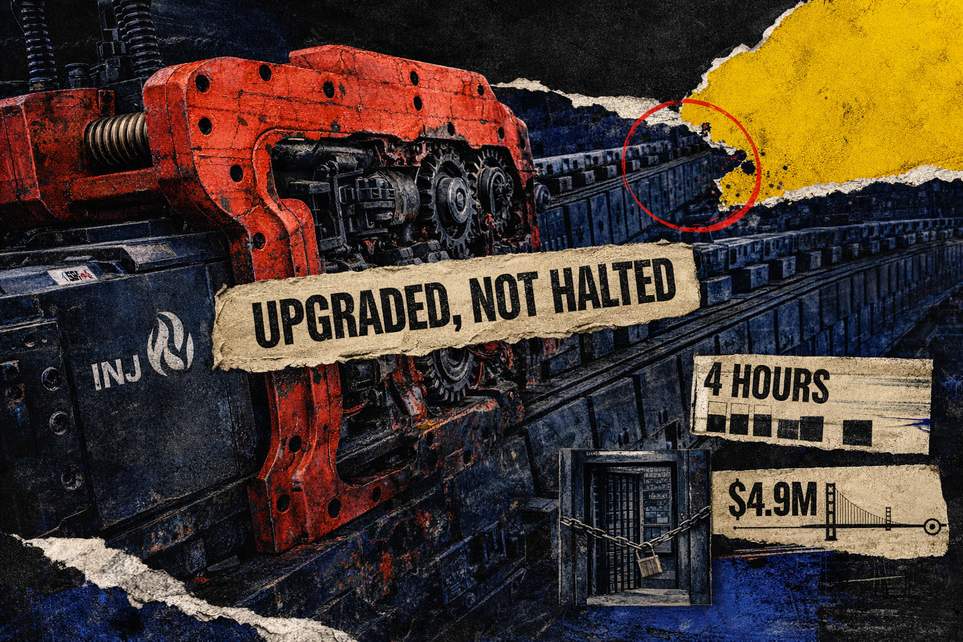
Layer-1 Blockchain Paused for 4 Hours to Stop a $4.9M Hack — Called It an Upgrade
The unexpected nap: 4 hours of no blocks
One layer-1 network went silent for nearly four hours after operators scrambled to stop what researchers traced to vulnerable core logic. Block production basically hit the snooze button: the ledger shows a long gap in blocks late on Aug. 31, with at least one block taking an absurdly long time to appear. That pause wasn’t graceful — some validators missed the hurried update window and were temporarily jailed, and a few exchanges paused transfers while things got sorted out.
The team behind the chain insisted this was an emergency upgrade rather than a network halt and said the consensus mechanism, native token, and staked assets remained safe. Others watching the chain weren’t quite ready to buy that sales pitch. Independent on-chain sleuths pointed out that the buggy logic lived in modules used by apps — especially parts tied to binary-options settlement and the insurance/exchange pieces — meaning the problem wasn’t just in a single third-party app.
What was fixed, what was lost, and why it matters
Developers pushed a quick emergency release that patched the troublesome code by adding checks to the insurance fund logic and by disabling binary-options settlement on mainnet while they cleaned up. In crypto terms: emergency duct tape. Researchers tracking the funds estimate roughly $4.9 million was moved off the chain to Ethereum during the incident, and that amount appeared to sit in an attacker-linked wallet afterward.
There’s still fog around the final tally and who footed any bill. The team hasn’t published a full postmortem listing exact losses, whether a pool was topped up by the foundation or other contributors, or which parties absorbed shortfalls. What is clearer: the consensus layer and staked tokens weren’t compromised, but the response did require a core-code fix and coincided with a multi-hour production interruption — not exactly a routine maintenance window.
Bottom line? The patch contained the immediate threat, but the event raises the same old questions: how did risky logic end up in core-facing modules, who pays for the cleanup, and how will this change monitoring and upgrade practices going forward. The foundation says it’s adding stronger invariants, better real-time monitoring, and other safeguards — which is the blockchain equivalent of promising to install better smoke detectors after a kitchen fire.
If you’re holding tokens or building on the network, keep an eye out for an official technical write-up and any follow-up notices from validators and infrastructure providers. Expect more detail over time, and maybe a few awkward conversations about code review and where to draw the line between protocol and app responsibilities.
