
Crypto PACs Are Winning Primaries Faster Than Their Laws Can Catch Up
Political money has discovered a turbo button: a handful of crypto-friendly super PACs are quietly bankrolling primary campaigns and racking up wins long before the laws they want even get a hearing. It’s like planting seeds in March and expecting a regulatory forest by November — ambitious, noisy, and slightly chaotic.
How the PACs are pulling off the magic trick
Rather than dropping cash into expensive, nail-biting general elections, these groups concentrate their dollars where they buy the most influence: sleepy, low-turnout primaries in safe districts. A few million in the right primary goes much farther than the same sum in a crowded swing-state war zone. The math is deliciously simple and the results have been startling.
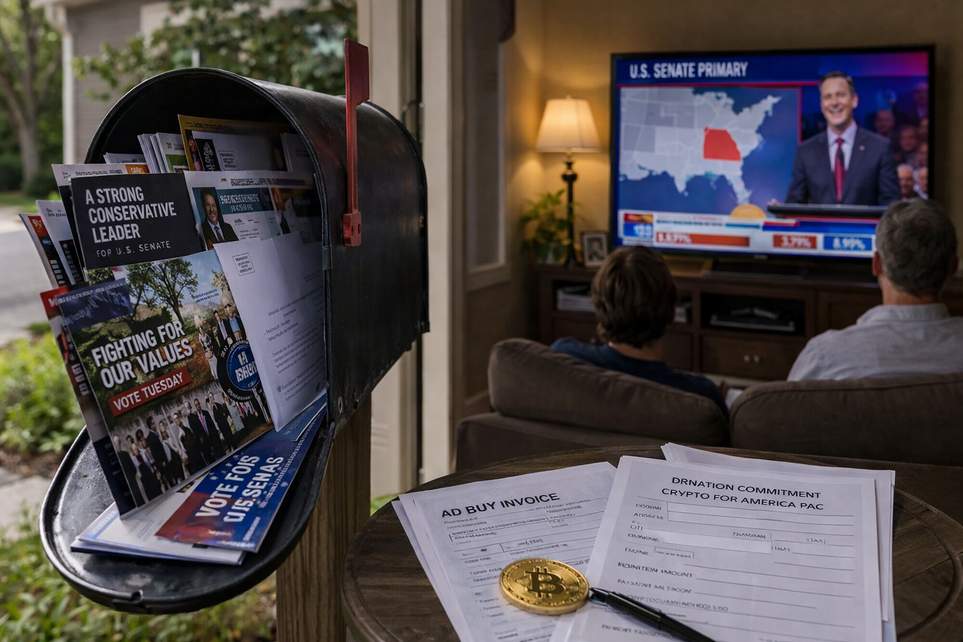
Case in point: one super PAC poured about $12 million into a single Alabama Senate primary, and that candidate won the runoff decisively — essentially turning a primary win into a near-lock for the Senate seat come November. In another southern sweep, millions were funneled into multiple races across Alabama, Kentucky and Georgia; the group posted a very high hit rate across those contests. They also spent heavily supporting a candidate in Kentucky to replace a retiring big-name senator, and that race ended in a comfortable victory.
The money isn’t strictly partisan. Through a Democratic-leaning affiliate, the industry backed a successful Houston congressional candidate, spending about $1.5 million on ads opposing a long-standing incumbent. And when things don’t go their way — like a multimillion-dollar push that failed in an Illinois Democratic primary — those losses are treated as rare hiccups rather than proof the strategy is broken.
Behind the checks are familiar names from the crypto and venture world — big exchanges, blockchain-focused firms and a16z-style investors — pouring hundreds of millions into the effort across cycles. The aim is blunt: turn cash into nominees, nominees into safe seats, and safe seats into a voting bloc that owes at least part of its political fortune to crypto dollars.
Why the laws they want keep getting left on the calendar
All this political muscle is meant to buy a particular prize: clearer market rules for digital assets. One popular proposal would split oversight between two regulators and give the commodities regulator authority over many spot crypto markets — a change that would settle years of legal uncertainty for exchanges and token projects. Another related law about payment stablecoins has already made it into the books, so the appetite for rules is real.
But here’s the rub: the star bill cleared the House months ago and even passed committee in the Senate, yet it’s still waiting for floor time. The Senate calendar is a crowded, slow-moving beast. There are policy snags (a sticky dispute over whether stablecoin issuers can pay yield is one example), but often the bigger problem is timing and a long queue of competing priorities.
Every pro-crypto lawmaker the PACs help nominate becomes another potential vote and another friendly face on the committees that will actually write the rules. That’s why the spending matters: it creates margin in a narrowly divided Congress. But electoral wins don’t instantly translate into law — procedural bottlenecks, floor scheduling and intra-party bargaining can keep even popular bills sidelined for months.
So the picture is part genius political targeting, part patience-testing legislative slog. The PACs have proven they can assemble a sympathetic group of lawmakers before those legislators ever set foot on the Senate floor. Whether that electoral momentum is enough to force a stalled bill into law depends on calendar logistics, a few tricky policy debates, and a willingness by lawmakers to move the agenda — not just on who gets elected, but on when the Senate chooses to vote.
In short: the cash is doing its job at picking winners; the law is still waiting for its curtain call.
