
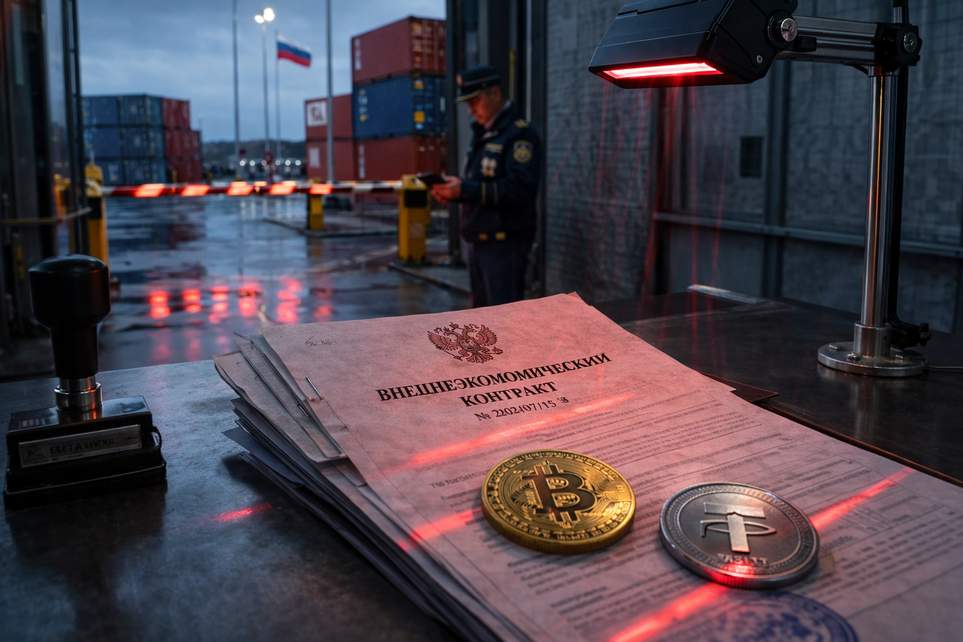
Russia creates crypto sanctions loophole, but cash-out routes remain ringfenced
Russia has quietly opened a pilot lane for settling some foreign-trade payments with digital assets. Think of it as a state-sanctioned experiment: certain exporters and importers may agree to use crypto for cross-border deals, but only under a tightly controlled, temporary regime and only if they meet the government’s criteria.
So what is this corridor, really?
In plain terms, Moscow carved out a legal tidy-up so a handful of firms can try crypto for trade settlements without being accused of breaking domestic rules. It’s not a general invitation to everyone with a wallet — it’s more like a VIP lane with a bouncer who checks lists, limits and rules.
The corridor makes the move from ‘‘fun workaround’’ to ‘‘supervised pilot.’p>
However, having a domestic green light isn’t the whole movie. A trade payment still needs a buyer and seller to agree on which digital asset to use, someone to supply liquidity, a place to hold the coins (a wallet or custodian), and a way to convert cryptocurrency into spendable money. Every one of those steps often touches firms or services that operate outside Russia’s legal reach — and those actors may have their own sanctions or compliance headaches.
Why this might be a clever paper tiger
Here’s the rub: legal permission inside Russia ≠ a functioning cash-out network. If foreign exchanges, wallet providers, custodians, or stablecoin issuers decide the sanctions risk is too hot, they can shut down the path. That leaves the corridor looking more symbolic than practical.
Which crypto you pick matters. Bitcoin has no single company that can freeze tokens, so it’s harder to stop at the asset level — but it’s volatile and messy for invoicing and conversion. Stablecoins give you dollar-like convenience, but they usually sit behind companies or contracts that can block access, freeze funds, and enforce sanctions rules.
In short: bitcoin is a rebellious lone wolf that still needs friends (exchanges, brokers, custodians) to make it useful in trade. Stablecoins act like obedient office workers who obey their boss (the issuer), and that obedience includes compliance with sanctions. Either way, the pain points show up at the off-ramps and service providers, not on the blockchain ledger itself.
What to watch next
If the corridor is going to mean anything beyond a headline, we’ll start to see operational clues: named participants, repeated settlement patterns, public details about which assets and limits are allowed, or actions by stablecoin issuers and infrastructure providers. Conversely, quiet silence from offshore liquidity providers and blocked trading rails would suggest the route is more boutique experiment than mass-market solution.
So for now, the corridor is a neat legal trick with big practical caveats. Moscow can scribble a permission slip in its own playbook, but the real test is whether the international plumbing — exchanges, issuers, custodians and compliance teams — lets the money flow without turning the transaction into a sanctions liability. If that happens, people will notice; if it doesn’t, the whole thing will stay an interesting footnote.
