
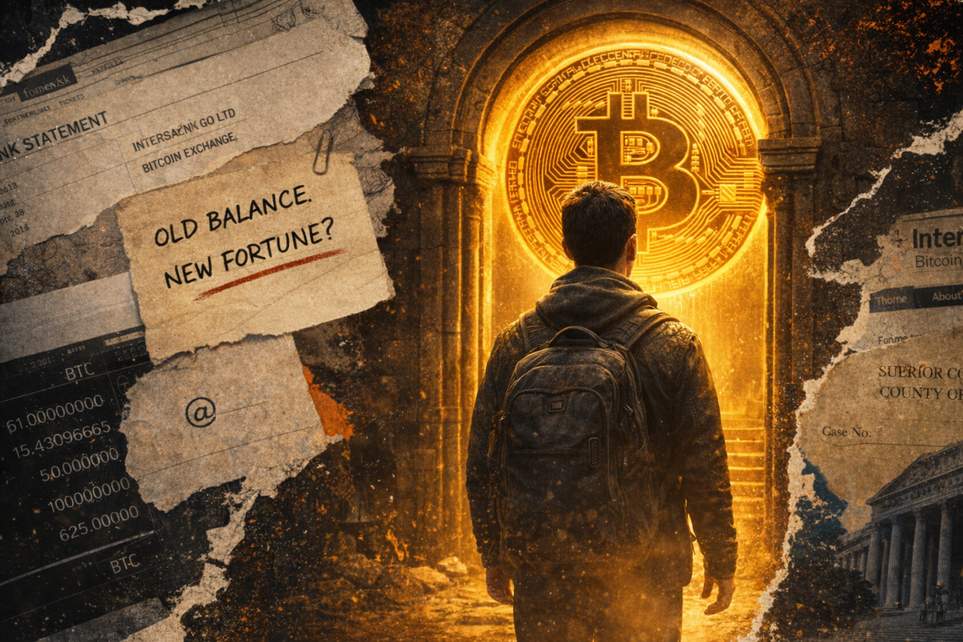
How 61 BTC Kicked Off a $432M Treasure Hunt for Early Bitcoin Users
Small forgotten balances, big modern paydays
Believe it or not, a law firm recently traced more than 5,500 BTC that appear to belong to users of an old exchange called Intersango. At today’s eye-widening Bitcoin price, that pile of coins is worth roughly $433 million. And it only takes one success story to set a stampede in motion: one former customer reclaimed 61 BTC after asking a solicitor for help, turning what had been virtual dust into an actual multimillion-dollar payout.
That single recovery — the client instructed the firm in January and the case settled in late May — returned coins now worth several million dollars. The headline here isn’t just the number, it’s the signal: if one person can prove an old balance and get coins back, a lot of other long-forgotten accounts suddenly become worth digging through attics, email archives, and old shoeboxes of bank statements.
Why old records matter and how the hunt works
Back when Intersango was active, Bitcoin was trading for pocket change compared to today. A handful of BTC could be the price of a used video game; these days the same handful could pay for a small island (maybe). That historical context explains why records from a decade or more ago — emails, support tickets, bank transfers, screenshots — are now golden evidence. They tie a person to an account and a specific balance, which is what courts and recovery teams need to pass coins back.
Recovery is part detective work, part legal slog and part crypto forensics. Blockchain tracing can show where coins moved after an exchange shut down, but the public ledger can’t prove which customer owned which account. That human link comes from paperwork: the email attached to an old account, correspondence with the exchange, bank records showing deposits, or archived customer tickets.
There are hurdles. People lose access to old email accounts, trash decades-old bank statements, or simply gave up when a balance was worth almost nothing. Obtaining bank records from 10–15 years ago can be a major headache, and legal work costs money. Still, modern prices make even tiny balances worth pursuing — a 5 BTC stub that was once laughable can be a life-changing amount today.
The legal landscape also matters: ongoing litigation connected to Intersango has produced court filings that reference customer balances, and settlements or rulings can shape how recoveries proceed. One separate court filing cited a customer ticket confirming about 15.46 BTC, a tidy sum now worth well into six figures. All of this adds up to a pretty clear message: if you used an early exchange and have any trace of proof, it’s worth checking.
To put numbers in perspective, the traced 5,500 BTC pool sits in the hundreds of millions at current prices. If Bitcoin climbed to $100,000 each, that pool would be worth roughly half a billion; if it fell to $50,000, it would still be a very large number. That range explains why lawyers, forensic tracers, and former customers are suddenly motivated to chase records that once seemed pointless.
In short: your ancient support ticket or dusty bank transfer might be a treasure map. It won’t be easy, and it might take money and patience, but the payoff can be enormous — and one 61-BTC win shows it’s possible, even after a decade of radio silence from the exchange.
