
Circle’s $32 Trillion USDC Circus: Lots of Motion, Not Much Tollbooth Revenue
Coin Metrics’ mid‑year read shows USDC changing hands like it’s on a merry‑go‑round — roughly $32 trillion of adjusted transfers and an annualized turnover that suggests each dollar in circulation moved hundreds of times. Sounds wild, right? But here’s the punchline: Circle’s actual reported revenue is still overwhelmingly powered by interest on the assets backing USDC, not tiny fees every time a coin spins through the system.
Big movement, tiny tollbooth
That $32 trillion number is a velocity headline, not a receipts ledger. A lot of the transfers are plumbing: liquidity rebalances, lending and arbitrage, DEX liquidity provision and flash loans. On some chains, a huge slice of activity looks like automated liquidity maneuvers or single‑transaction borrow‑and‑repay plays. Those pile up enormous gross transfer counts but don’t translate into matching net capital shifts or a flood of fee revenue for Circle.
In plain terms: the same dollar can be moved a dozen or a hundred times without creating dozens of fee events that benefit Circle. Some volume is clearly commercial (bridging, treasury moves, payments), but a nontrivial chunk is mechanical to keep markets efficient — useful for traders and protocols, less useful for a company that needs predictable fee income.
Yield, not tiny fees, still runs the show
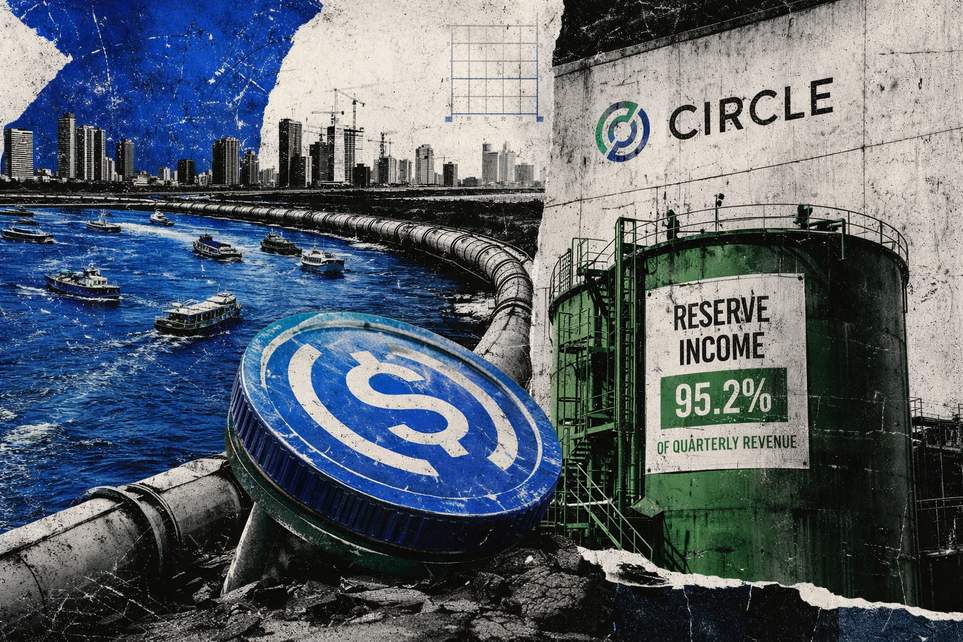
Look at Circle’s reported quarter and you’ll see the math: nearly all of the company’s revenue came from reserve income — interest earned on assets that back USDC — while transaction revenue was a rounding error by comparison. Growing the amount of USDC outstanding increases the interest‑earning base; changes in interest rates drive the rest. A bump in circulation helps, but lower yields can wipe out most of that gain.
Costs also matter. Circle pays distribution and transaction expenses that are hundreds of millions per quarter, which means big gross reserve income is not the same as big profit. The company’s own sensitivity estimates show how a one‑percentage‑point move in yields can swing reserve income by an amount on the order of the company’s entire reported revenue — so interest‑rate moves, not transfer counts, are the clearest near‑term revenue lever.
That’s why Arc matters on paper: it’s Circle’s effort to build a place where USDC activity generates visible, dollar‑denominated fees. Arc’s fee model charges gas in USDC, which is a more obvious fee surface than plain transfers across other chains. But a protocol charging fees and a company actually keeping recurring revenue from those fees are two different things. Token presales and deferred proceeds are financing events, not proof that the business model has shifted.
After the public mainnet launch, the real tests will be whether traffic stays beyond short‑term liquidity loops, which transaction types dominate, and — crucially — whether Circle starts reporting meaningful growth in transaction or service revenue instead of only boasting network activity stats.
Bottom line: USDC’s trillion‑plus movements show it’s a plumbing superstar, deeply woven into crypto markets. But until Circle turns more of that motion into repeatable, retained fees, the company’s fortunes will look a lot more like an interest‑rate playbook than a toll road. Expect headlines about astronomical transfer volumes — just don’t confuse them with guaranteed fee income.
