
Strategy Splits $603M From Share Sale Between Bitcoin Buys and Preferred-Stock Support
Quick recap — the short and spicy version
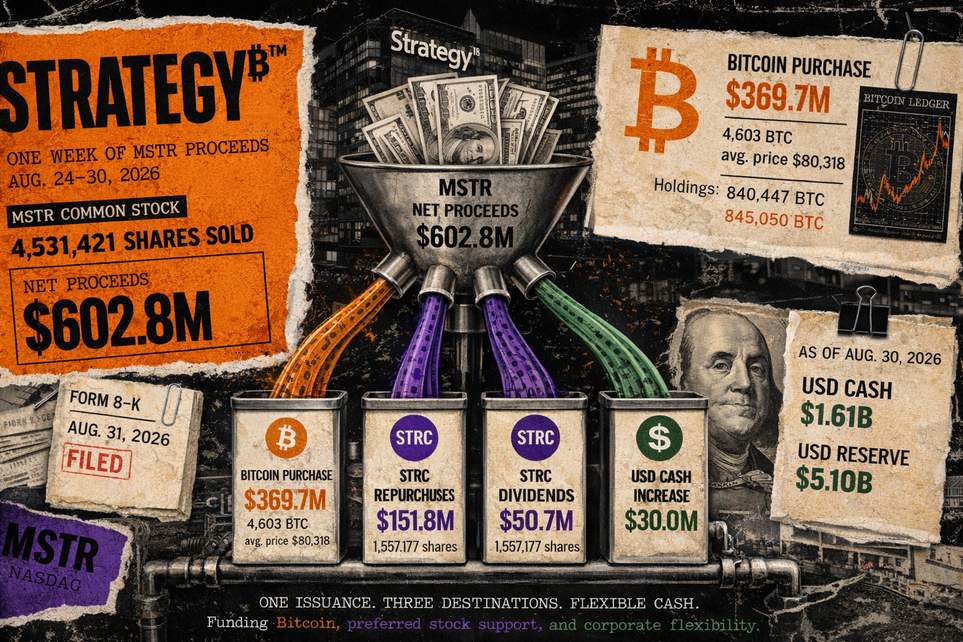
Strategy sold 4,531,421 of its common shares and pulled in about $602.8 million. Instead of stuffing it all under a mattress, the company spread the cash across three main buckets: more Bitcoin, support for its STRC preferred stock, and some flexible USD cash for future moves.
Here’s the rough money map: roughly $369.7 million went toward buying Bitcoin, about $151.8 million was used to buy back 1,557,177 STRC preferred shares, $50.7 million covered STRC dividends, and $30 million was parked in a USD Cash account. If you add those four line items the math comes to $602.2 million — about $0.6 million shy of the $602.8 million headline figure, likely just a rounding or reporting quirk.
Where the cash actually landed and why it matters
Bitcoin was the biggest beneficiary. Over the week of Aug. 24–30, Strategy purchased 4,603 BTC at an average all-in price of about $80,318 per coin. That nudged the company’s total BTC stash from roughly 840,447 to about 845,050 coins. For the full holding, Strategy reports an aggregate purchase cost near $63.73 billion and an average cost of about $75,412 per BTC.
The remaining proceeds were clearly intended to shore up the preferred-stock side of the balance sheet. Strategy didn’t sell any STRC through its at-the-market programs during the period; instead, it used a combined ~$202.5 million of proceeds for STRC share repurchases and dividend payments. After the buyback, the firm still had about $364.8 million available under its broader preferred-stock repurchase program.
A neat little $30 million went into a USD Cash account — a flexible pot the company can tap for future Bitcoin buys, reserve expansion, capital management, or other corporate needs. USD Cash is distinct from the USD Reserve, which is earmarked primarily to back preferred dividends and interest on outstanding debt. As of Aug. 30, Strategy reported roughly $1.61 billion in USD Cash and about $5.1 billion in its USD Reserve, with both totals reflecting some expected proceeds from at-the-market share sales that hadn’t settled yet.
Bottom line: the recent equity raise wasn’t a one-trick pony. It funded more Bitcoin accumulation, kept preferred holders happy with repurchases and dividends, and added a bit of dry powder for whatever’s next. Also, yes, a tiny rounding gap exists in the disclosure — common in these filings and nothing that looks dramatic on its face.
