
Strategy’s $603M Shuffle: Bitcoin Buys, STRC TLC, and Cash Stash
Quick recap: the money dance
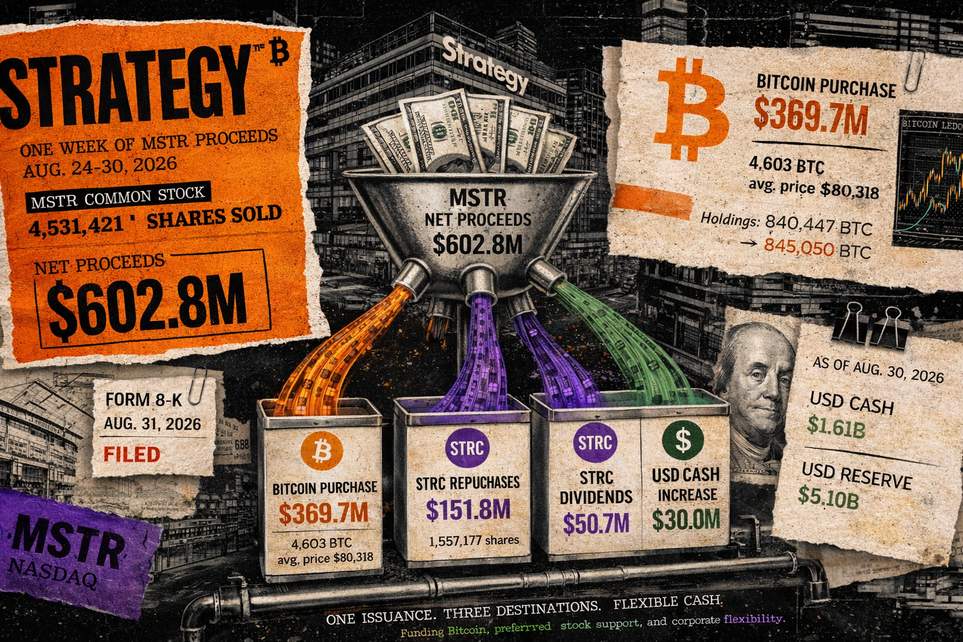
Strategy sold roughly 4.53 million of its common shares and pulled in about $602.8 million. Instead of dropping all that cash into one giant pot, management split it up like a picky buffet: about $369.7 million went straight into buying Bitcoin, $151.8 million bought back 1,557,177 shares of its STRC preferred stock, $50.7 million covered STRC dividends, and $30 million was parked into a flexible USD Cash account.
If you like trivia, the four line items add to $602.2 million — around $0.6 million shy of the rounded $602.8 million total reported. The filing numbers are shown to one decimal place and don’t explicitly explain that tiny gap, which probably means someone’s doing the math with slightly different rounding rules.
Why this matters (short version: juggling Bitcoin, preferreds, and dry powder)
Over the week of Aug. 24–30, Strategy bought 4,603 BTC at an average price near $80,318 (fees included). That nudged its stash from about 840,447 BTC up to roughly 845,050 BTC. For the whole Bitcoin position, the company reports an aggregate purchase cost of about $63.73 billion and an average cost around $75,412 per coin.
Instead of using the new proceeds to sell off preferred shares through at-the-market programs, the company funneled roughly $202.5 million toward STRC buybacks and dividend obligations. After the recent repurchase, it still has about $364.8 million available under its broader preferred-stock repurchase program.
Thirty million dollars went into USD Cash — a flexible account the firm can dip into for more Bitcoin buys, reserve padding, capital management, or other corporate uses. As of Aug. 30, Strategy reported about $1.61 billion in USD Cash and roughly $5.1 billion in a separate USD Reserve that’s earmarked for preferred dividends and interest on debt. Both balances factor in proceeds from shares that were sold but hadn’t settled yet.
The upshot: the company’s recent equity issuance is doing triple duty — bulking up Bitcoin holdings, supporting preferred-stock obligations (and buybacks), and keeping some nimble cash available. Translation: they’re trying to be bullish on Bitcoin while also being responsible-ish about their preferred holders and keeping a little rainy-day fund.
